


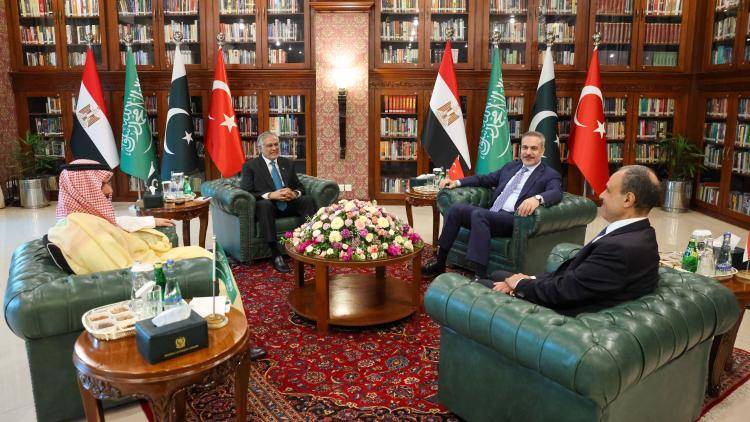
Egypt has responded to the Iran war through active diplomacy and mediation. This approach is not intended to compete with Pakistan or any other country for influence as the primary mediator. Instead, Cairo’s strategy is focused on achieving its main objective: bringing the war to an end.
The policy reflects Egypt’s broader approach of managing risks in an increasingly volatile Middle East. Cairo seeks to protect its national interests, maintain stability near its borders, and revive its struggling economy, which has faced additional pressure due to the ongoing conflict.
Egypt’s Response to the War
Egypt condemned Israel’s earlier strikes on Iran in June 2025 and reportedly pushed for de-escalation ahead of the joint US-Israeli strikes on Iran in late February 2026. However, Cairo avoided publicly condemning the later attacks, a move that reflected Washington’s deep involvement in the conflict.
Since then, Egypt has also condemned Iran’s missile strikes on Gulf states. In response to rising regional tensions, Cairo reportedly deployed Rafale fighter jets and air defence systems to the UAE and other Gulf countries.
President Abdel-Fattah el-Sisi has visited Gulf states twice since the war began. In March, he publicly urged US President Donald Trump to work toward ending the conflict through diplomacy.
Egypt has additionally become part of a new informal regional quadrilateral grouping alongside Pakistan, Turkey, and Saudi Arabia. The four countries share concerns over the regional agenda pursued by Israel and its allies, including the UAE. They also fear that the collapse of the Iranian regime could significantly shift the regional balance of power in Israel’s favour.
Since mid-March, members of this informal bloc have held several diplomatic meetings aimed at securing a ceasefire. At the same time, Egyptian Foreign Minister Badr Abdelatty has led an extensive diplomatic campaign, coordinating closely with the quadrilateral members, Gulf states, the United States, and European powers.
Reports also suggest that Egypt’s General Intelligence Service initiated backchannel communications with Iran’s Revolutionary Guards in mid-March. Cairo reportedly proposed a five-day truce as a confidence-building step toward a broader ceasefire. According to these reports, such efforts contributed to President Trump adopting a more diplomatic stance, which eventually helped pave the way for the Pakistan-mediated ceasefire agreement.